Guide Notes
A Beginner's Fly Box for the Sacramento Mountains
October 26, 2026
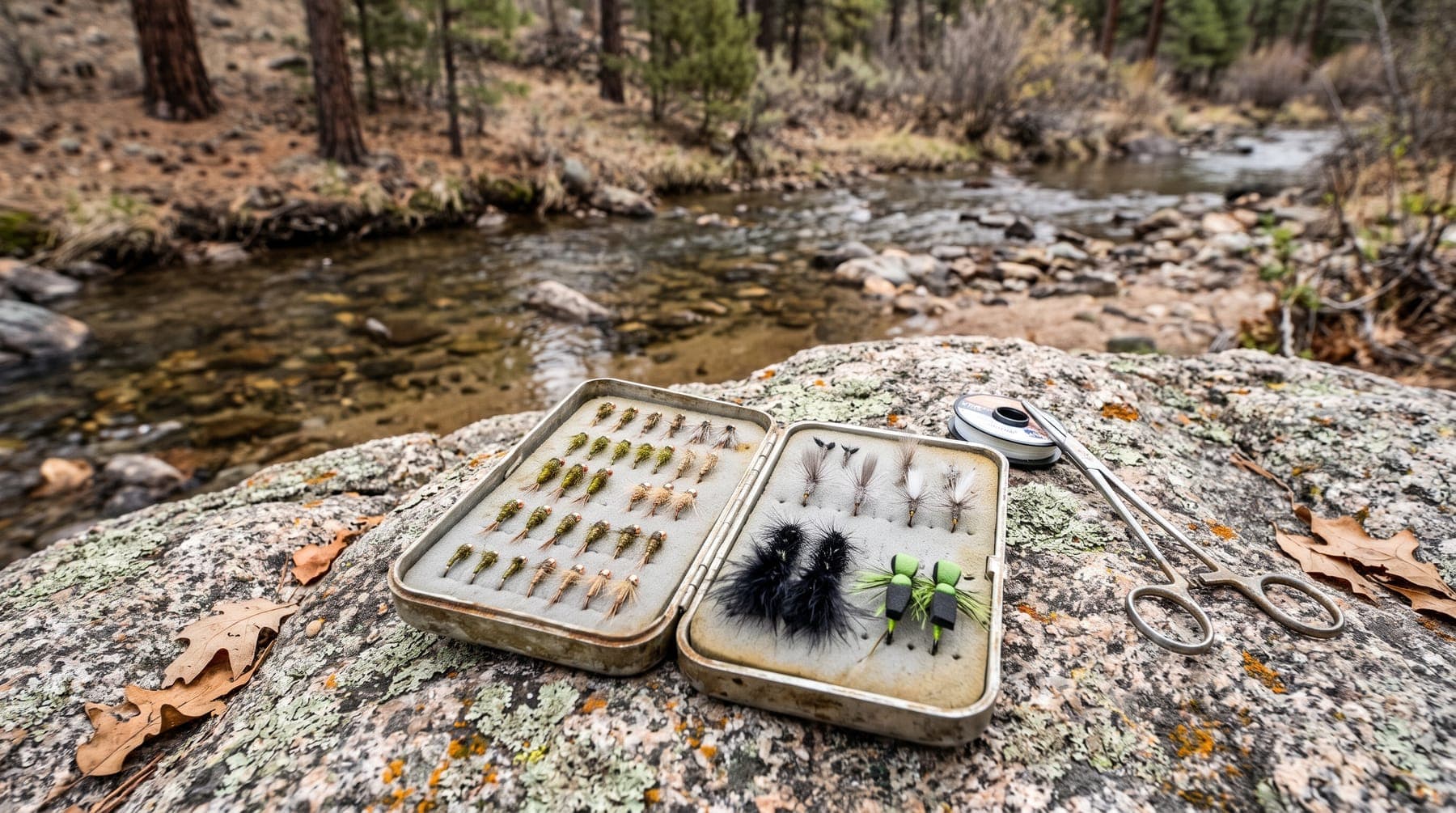
A beginner's fly box for the Sacramento Mountains (or most other waters) needs about a dozen patterns, not two hundred. Walk into any fly shop and the wall of tiny feathered hooks can freeze even a confident shopper. The good news: the trout in our high country are not picky about much, and a short, well-chosen box covers almost everything you will meet from the cool pine-lined streams around Ruidoso and Cloudcroft to the lakes higher up. The real key is that the important thing isn't usually the fly, it's the way it's presented.
This list is built around four ways trout feed: under the surface (nymphs), chasing prey (streamers), on top (dry flies), and on terrestrials that blow or fall into the water in summer (hoppers, ants and beetles). Pack one or two patterns from each group in the sizes below and you can adapt to whatever the water gives you.
How to read this fly box
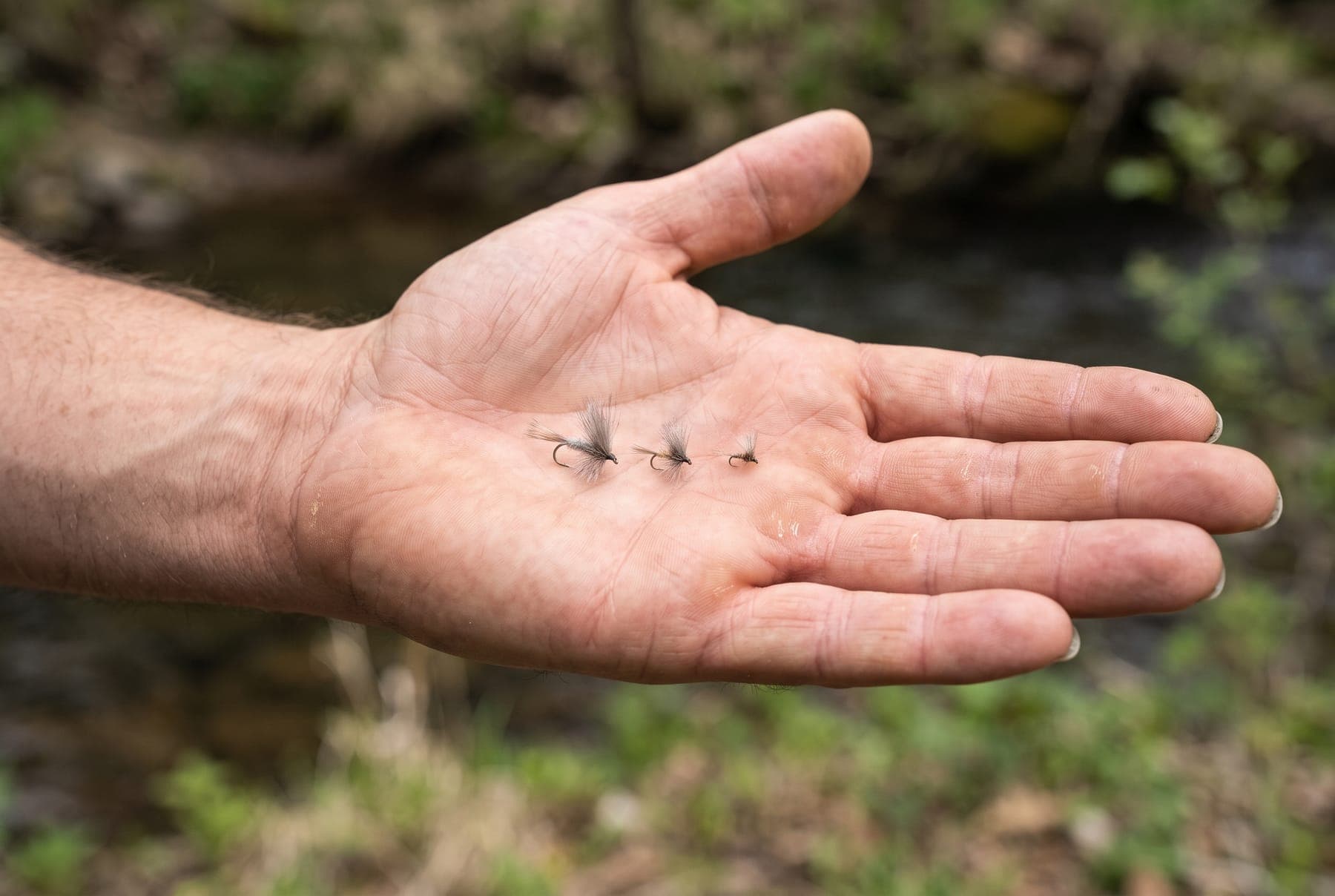
Hook sizes run backwards: the bigger the number, the smaller the fly. A size 8 woolly bugger is a meaty streamer, while a size 20 Parachute Adams is barely larger than a grain of rice. Most of this box sits between sizes 16 and 8, with a few tiny dries for picky fish.
This lineup is designed for the kinds of water around Ruidoso and Cloudcroft: small mountain streams like the Rio Bonito, stocked lakes such as Alto, Grindstone and Bonito, and our private spring creek water. If you are DIY'ing (or fishing with us), remember that a valid New Mexico fishing license is required for anglers 12 and older on public water; check current rules and fees on the New Mexico Department of Game & Fish license page.
Nymphs: where most trout eat most of the time
Trout take the majority of their food below the surface, so nymphs earn the biggest share of your box. Fish them on a dead drift, near the bottom, either under a small strike indicator or as the trailing fly under a dry.
Hare's Ear Nymph (Black, Olive, Natural) – Sizes 16, 18
The Hare's Ear is the most forgiving nymph you can buy. Its shaggy, buggy body looks like a mayfly, caddis or stonefly nymph without looking like any one of them exactly, which is why it works nearly everywhere. Carry all three colors and try all three, especially if you see fish looking at the fly but not biting!
See an example: Fly Fish Food, Gold Ribbed Hare's Ear or Feather Craft, Gold Ribbed Hare's Ear
Bead Head Hare's Ear Nymph (Black, Olive, Natural) – Sizes 16, 18
Same fly, with a metal bead behind the eye. The bead adds weight so the fly sinks faster and gets down to where fish are holding, and the flash adds a little attraction. Use the plain version in slow, shallow water and the bead head in faster runs and deeper pools. Having both lets you change depth without changing patterns.
See an example: Feather Craft, Bead Head Gold Ribbed Hare's Ear
Copper John – Sizes 16, 18
The Copper John is a heavy, flashy, wire-bodied nymph that dives quickly. Think of it as your "get down now" fly. Tie one on when the water is higher or faster, or use it as the lower fly on a two-nymph rig with a Hare's Ear above it. When in doubt, this is usually what I will start with.
See an example: Fly Fish Food, Copper John (BH) or Feather Craft, Barr's Copper John
Streamers: big flies, big reactions
Streamers imitate minnows, leeches and crayfish. They are easy for beginners because you simply cast, let the fly sink, and strip it back in short pulls. You can also cast them a little upstream, and let the current pull (swing) them through the water column, a great way to cover lots of water. Strikes are often hard and obvious, which makes them a confidence-builder, and they work well in stillwater as well as streams.
Woolly Bugger (Black, White, Olive) – Size 8
If you could only carry one fly for the rest of your life, the Woolly Bugger is a strong candidate. It can pass for a leech, a baitfish or a large nymph depending on how you move it. Black and olive are the all-purpose colors; white is a good choice for brighter days and for imitating small baitfish.
See an example: Feather Craft, Woolly Bugger
Conehead Woolly Bugger (Black, Olive) – Sizes 4, 8
The cone-shaped metal head gives this version weight and a jigging, up-and-down swim. It sinks faster than the standard Woolly Bugger, so it is the right pick for deeper lake water and faster current. The size 4 is your biggest fly in the box, great for casting to large fish; the size 8 is the all-around choice.
See an example: Fly Fish Food, Cone Head Wooly Bugger (white)
Dry flies: the most fun way to catch a trout
Watching a trout rise to a fly on the surface is why many people fall in love with fly fishing. Dry flies float, so you are looking for a rise, a swirl or a sip near your fly and setting the hook with a gentle lift of the rod.
Parachute Adams – Sizes 16, 18, 20
The Parachute Adams is the "general store" of dry flies. Its gray body suggests a mayfly, a midge or just about any small insect on the water. If you do not know what the fish are eating, start here. The three sizes let you step down when fish refuse the bigger one.
See an example: Fly Fish Food, Parachute Adams
RS2, Foam Wing – Size 24
This is the small stuff. The RS2 is a classic imitation of tiny emerging insects, and the foam wing version floats in the surface film where fish feed on midges and baetis (small mayflies) when they are being selective. It is a size 24, so it is hard to see and hard to tie on; practice at home with good light and a fresh length of fine tippet. It is not a fly for your first day, but it is the one you will be glad you packed when fish ignore everything else.
See an example: Fly Fish Food, RS2 Gray
Elk Hair Caddis (Natural, Black) – Sizes 16, 20
A buoyant, easy-to-see dry fly that imitates adult caddisflies, which are common in mountain streams. The elk hair wing keeps it floating even in riffles and pocket water. Natural is the standard; black is a good second choice when natural gets refused. The size 16 is easiest to see and a good starting point, and the size 20 is the backup for fish that have seen plenty of flies.
See an example: Feather Craft, Elk Hair Caddis
Terrestrials and big foam: summer's secret weapons
When the weather warms, grasshoppers, ants and beetles end up on the water, and trout watch for them. Big foam flies are also easy for beginners to see and float all day, so they make good "indicator" flies to hang a nymph beneath.
Chubby Chernobyl (Green) – Sizes 8, 10
This oversized foam attractor looks like a big grasshopper or stonefly. It lands with a splash and floats well, so you can drop a small nymph below it on a short length of tippet and fish two flies at once. Its high visibility makes it a great pick for new anglers who struggle to watch tiny dry flies. If you kick up grasshoppers in the grass on the way to the water, then start with a hopper pattern cast close to the bank!
See an example: Fly Fish Food, Chubby Chernobyl (olive)
Foam Ant (Black) – Sizes 12, 16
Ants are on the menu all summer, and trout take them eagerly when they fall into streams from overhanging brush. A black foam ant floats high, is easy to see, and is a reliable choice along grassy banks and under trees. Use the size 12 when you want visibility and the size 16 when fish are cautious. Don't forget that this can pass for a small beetle, or even a tiny hopper on windy summer days when all kinds of tasty treats get blown into the water.
See an example: Fly Fish Food, Hi-Vis Micro Chubby (Black Magic)
Foam Bass Bug (White, Green) – Size 6
This is the fun fly. Some of our local lakes, including Alto and Grindstone, occasionally give up smallmouth and largemouth bass along with their stocked rainbow trout, and a foam popper makes a noisy splash that can bring them up. White works in brighter light; green blends with weeds and pads. Pack a couple for a change of pace!
See an example: Fly Fish Food, Bass Popper (chartreuse)
The Mop Fly: odd looking, surprisingly effective
The Mop Fly is a small hook wrapped with a fuzzy strand of microfiber, and it looks like nothing in nature, which is exactly why anglers argue about it. Fish seem to read it as a worm, a larva or a bit of drifting food. It is a size 16 in grey, white and chartreuse, and it is fished like a nymph: dead-drifted under an indicator or as the trailing fly behind a Hare's Ear or Copper John. Some look down on the mop fly, but we believe in the old saying that "if it's stupid, but works, it's not stupid!"
When the usual patterns are not getting looks, try changing the color before changing anything else. Grey is subtle, white shows up in stained water, and chartreuse is a bright, high-visibility option. Always check the regulations for the water you are fishing, since some waters require barbless hooks, though we recommend them everywhere since it makes unhooking fish (or yourself) much easier!
See an example: Fly Fish Food, Tungsten Bomb Mop Fly (chartreuse) or Feather Craft, Matt's Mop Fly
The full fly box at a glance
Use this as your shopping list. Sizes follow the hook-size rule above (bigger number = smaller fly).
- Hare's Ear Nymph: nymph, black, olive and natural, sizes 16 and 18
- Bead Head Hare's Ear Nymph: nymph, black, olive and natural, sizes 16 and 18
- Copper John: nymph, sizes 16 and 18
- Mop Fly: nymph or larva, grey, white and chartreuse, size 16
- Woolly Bugger: streamer, black, white and olive, size 8
- Conehead Woolly Bugger: streamer, black and olive, sizes 4 and 8
- Parachute Adams: dry fly, sizes 16, 18 and 20
- RS2, Foam Wing: emerger or dry fly, size 24
- Elk Hair Caddis: dry fly, natural and black, sizes 16 and 20
- Chubby Chernobyl: foam attractor, green, sizes 8 and 10
- Foam Ant: terrestrial, black, sizes 12 and 16
- Foam Bass Bug: popper, white and green, size 6
Where to buy these flies: Pattern details in this guide draw on Fly Fish Food and Feather Craft, both of whom run great online fly shops. We think the best place to buy flies is a local fly shop that knows what is working right now. See our list of New Mexico fly shops we trust.
Ready to put the box to work?
A fly box is only as useful as your confidence using it. If you would like to learn how to rig, cast and fish these twelve patterns with someone beside you, Sky Island Adventures offers fly fishing instruction and guided trips in the mountains of southern New Mexico, from first-time beginners to experienced anglers.
- Browse trips and instruction or book a trip to fish with us.